REC Rising Star Award: Shining a Light on Early Career Research
Across the Alzheimer’s Disease Research Centers (ADRC) Program, Centers are dedicated to mentoring the next generation of Alzheimer’s disease and related dementia researchers. One of the many ways that Centers do this is through their Research Education Components (REC). The RECs provide mentoring and training opportunities to support early career investigators through ongoing programs and events such as an annual Mock Study Section and a poster session at the semi-annual ADRC Meeting spotlighting REC Scholar research.
The REC Scholar poster session is judged by a volunteer committee of established ADRC members who determine the REC Rising Star Awardees. Posters and presenters are judged on four elements: overall visual presentation, organization, potential for scientific impact, and comprehension. Judges also record constructive feedback for each poster, which is shared with presenters after the event.
2026 Spring REC Rising Stars
Kevin Lin, PhD, Assistant Professor, University of Washington

Kevin Lin, PhD, is an Assistant Professor of Biostatistics at the University of Washington, and Principal Investigator of the Lin Lab. His team is focused on creating new computational tools that may help interpret the impact of microglia, which are immune cells that live in the brain, on Alzheimer’s disease and related dementias (AD/ADRD). Previous research supports the idea that microglia may play an important role in increasing a person’s resiliency to AD/ADRD.
Lin’s poster presentation at the 2026 Spring ADRC Meeting featured a new computational tool that aims to link neuropathology imaging and genomic data to identify correlations between genes and specific imaging phenotypes that may be indicative of resilience to AD/ADRD. Lin believes findings from this research could open the door to alternative therapeutics that focus on increasing a person’s cognitive resiliency instead of removing amyloid plaques.
At the time of his presentation, this computational tool had only been tested on mouse models, but Lin’s team is testing the model using human data this summer and hopes to address any challenges they encounter to make it usable for wider research. Lin’s team is collaborating with multiple labs at the University of Washington and the UW ADRC to access human data for their testing. Lin says he is especially thankful for the collaborative environment across the UW ADRC, not only for its impact on this project, but for shaping his overall career trajectory and for opening the door to novel questions and research opportunities.
Emily Morris, PhD, Postdoctoral Research Fellow, Rush University Medical Center
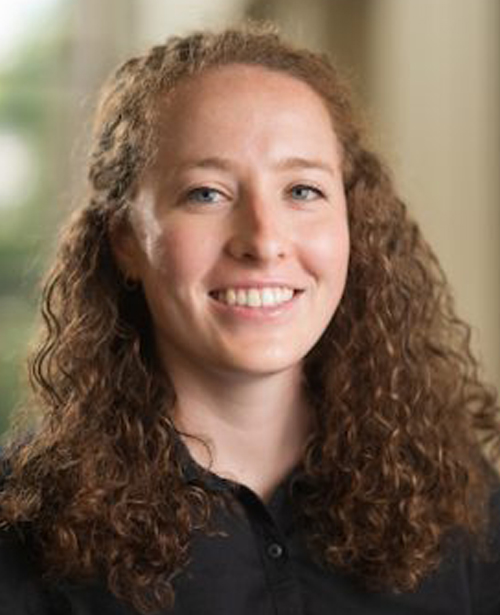
Emily Morris, PhD, is a Postdoctoral Research Fellow at the Rush University Medical Center in training to be a clinical neuropsychologist. Her research is on disparities in cognitive health over the course of a person’s lifetime, with a specific focus on psychosocial factors such as discrimination, financial inequality, and neighborhood factors.
After learning about health disparities in people living with HIV while studying psychology and public health during her undergraduate career, Morris worked at the Manhattan HIV Brain Bank focusing on social determinants of health and cognitive aging among older people living with HIV. Then, while working on her PhD, she transitioned to focus on neurodegenerative diseases such as AD/ADRD.
Morris’s poster presentation at the 2026 Spring ADRC Meeting looked at the impact of social engagement on the cognitive decline of older Black adults in Chicago. Morris considered social engagement, including both psychological elements such as loneliness and purpose in life and behavioral elements such as social activity, social network, and life space—or the extent to which somebody leaves their home, their block, their neighborhood, etc.
While prior research has focused on these elements one-by-one while controlling for the others, Morris’s research intentionally considered all the elements at once to identify groupings of participants. She found that while the group that tested to have the highest social engagement—high social activity, high purpose in life, large social network size, high life space, and low loneliness—did better at baseline and over time, the other two groups, one which showed low social engagement overall and another that had large social networks, high rates of social activity, and large life space but had high loneliness and lower purpose in life both had worse cognitive testing at baseline.
Morris believes this research could be used to create a screening tool that would help identify patients who could benefit from receiving psychological interventions that could improve their social engagement and increase their resiliency to AD/ADRD.
Ian Weidling, PhD, Postdoctoral Fellow, University of Kansas Medical Center

Ian Weidling, PhD, is a second-year postdoctoral fellow in Dr. Russell Swerdlow’s Lab at the University of Kansas Medical Center. Weidling studies the hypothesized relationship between mitochondrial dysfunction and Alzheimer’s disease. His work involves triggering mitochondrial dysfunction in cell-based models and then comparing that outcome to known Alzheimer’s disease-associated molecular changes.
In his poster presentation at the 2026 Spring ADRC Meeting, Weidling presented his work on analyzing how mitochondrial dysfunction affects brain cells, specifically the ways the team has found that it affects RNA processing. “When there’s a stressful condition, such as the cell having a hard time producing the energy it needs, then it has all of these compensatory responses at its disposal and one of those is that it can change RNA processing in a way that ultimately helps it better survive the stressful experience,” said Weidling.
Weidling’s research seeks to understand whether energy production in the cell may influence tau and amyloid proteins in a way that aligns with the current understanding of Alzheimer’s disease. He says the AMP-AD dataset has been a powerful tool for assessing how closely the team’s cell-based models of mitochondrial dysfunction align with the already identified molecular changes associated with Alzheimer’s disease.
Weidling believes that making these connections and better understanding the exact mechanisms behind AD/ADRD may open the door to novel therapeutics to treat AD/ADRD by mitigating mitochondrial dysfunction.