
Decoding the Brain's Resistance to Alzheimer's Disease
Using data from the National Alzheimer's Coordinating Center (NACC) and several other major studies, an international team of researchers has identified common characteristics in individuals who are resilient against the symptoms of Alzheimer's disease, even as their brains develop the condition's characteristic pathology. The work, published in the August issue of the journal Brain, helps address a longstanding puzzle in dementia research, and suggests interventions that might help avoid or delay cognitive decline.
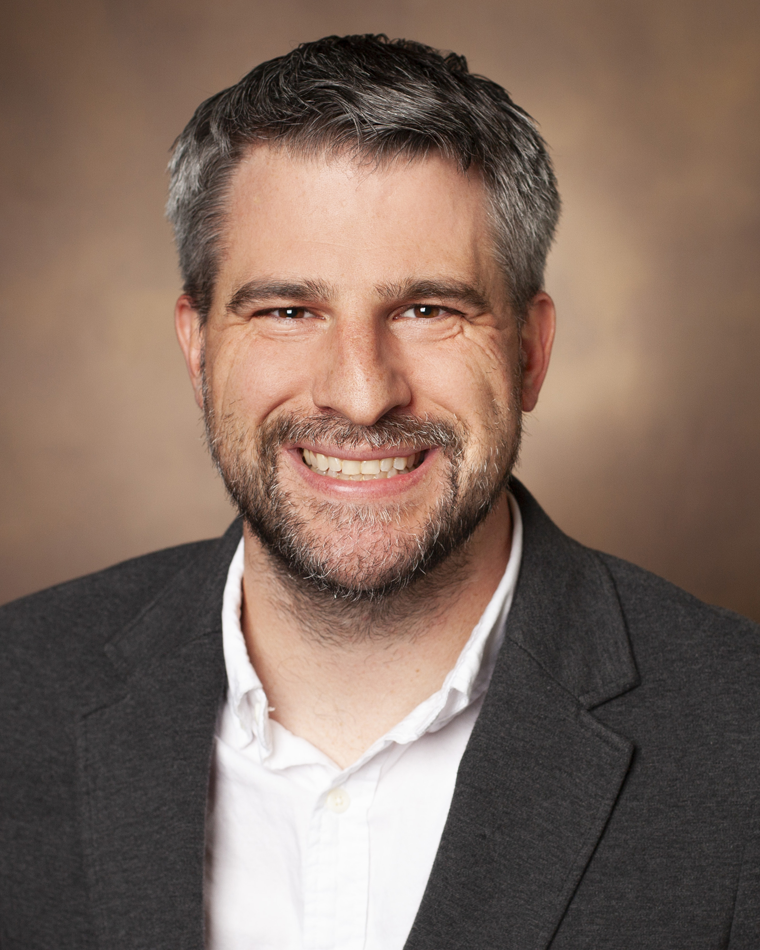
At autopsy, up to 30% of older adults who had no signs of cognitive problems in life nonetheless show clear evidence of Alzheimer's disease pathology in their brains. Timothy Hohman, Professor of Neurology at Vanderbilt University in Nashville, TN, and senior author on the new study, first encountered this phenomenon when working with the Baltimore Longitudinal Study on Aging. "They … saw people with continued normal and sometimes even superior cognitive abilities who went on to autopsy, and if you just looked at their brain you would say 'wow, this was an Alzheimer's disease patient,' but in life they never showed symptoms of it," says.
Much of Hohman's work has focused on figuring out how that happens. "To define a resilience phenotype, you have to have a lot of people who have measures of pathology, and that's a challenge, and then you have to have measures of cognition in those same people, and then if you're going to run genetics, you need all of those things to be on the same scale," he says.
Harmonizing Global Datasets to Unlock Genetic Insights
By harmonizing data from multiple studies and databases, Hohman's team found the first glimmer of an explanation in 2019. That project looked at four large cohorts of patients who'd had the right combination of cognitive, genetic, and pathology studies done. The results clearly linked Alzheimer's disease resilience to particular genetic markers. However, the work had two major limitations. "We only looked at cross-sectional cognitive data, so we only looked at one time point, [and] the other limitation was that every one of those participants was non-Hispanic white," says Hohman.
The team hadn't set out to use such a homogeneous sample. "It was because when you require a measure of neuropathology, you end up biasing towards higher educated, largely non-Hispanic white cohorts that either have a PET scan or an autopsy," says Hohman.
To get around those problems, Hohman wanted to develop a system that could predict Alzheimer's disease without requiring autopsies. Enlisting a large team of collaborators from around the world, the team combined eight large databases, encompassing diverse cohorts with or without pathology data.
Before analyzing the data, though, the investigators had to get it all into consistent formats. "We [went] back to every one of these cohorts and requested that they send us every neuropsychological item that they administer … and then we had an expert panel of neuropsychologists and neurologists who'd go through each one of those and determine what domain of cognition it was measuring," says Hohman. The team did the same thing for other portions of the data, harmonizing all of the characteristics they planned to include in their analysis.
With the data consistent, Hohman and his colleagues developed two sets of statistical models, which they designated "gold" and "silver." The gold models include pathology data, while the silver models don't. "In the silver model, we're just going to say 'all right, how much variance can we explain in cognitive performance when we don't have that gold standard measure of neuropathology?" says Hohman.
The scientists searched for factors that correlated with lower rates of cognitive decline, in participants who carried the high-risk Alzheimer's disease genes APOE ε2 or ε4. In the gold models, which served as controls, they could confirm whether patients actually went on to develop neuropathology. It turned out that the silver models, without pathology data, highlighted the same factors as being important for resilience. "The paper is sort of a proof of concept that this is feasible and tractable, that we can use less information from a lot of people … to try to get at this resilience trait at a scalable level," says Hohman.
Advancing Resilience Research
The next step was for the researchers to analyze much larger cohorts, especially with the NACC dataset. "NACC is the largest contributor of participants, it's our largest genetics dataset, it's our largest cognitive dataset, it's our largest neuropathology dataset, and it's our largest by a lot," says Hohman, adding that "NACC is really driving what we're able to see in all of these analyses."
Besides its size and diversity, Hohman highlights the "real world" aspect of the NACC dataset. "You have people who are coming into the dataset with dementia right out of the gate, you have people who are showing up with other forms of dementia, so you just have a lot more heterogeneity in the type of participant you see," he says. A model that works well on the NACC dataset has to be more robust than one built on a narrower foundation, making it more likely to work in the clinic.
“NACC is the largest contributor of participants, it's our largest genetics dataset, it's our largest cognitive dataset, it's our largest neuropathology dataset, and it's our largest by a lot”
In both models, certain genetic markers correlate with resilience, and the team can now generate a risk score based on those markers. But the resilience markers only seem to matter in those who develop Alzheimer's disease pathology. "The polygenic risk score for resilience doesn't look like the Alzheimer's disease one at all … it's not very predictive in the absence of pathology, but once you have pathology, the resilience trait is a better predictor [of avoiding cognitive decline]," says Hohman.
Though people can't control what genes they inherit, resilience screening could still be useful. "Often the factors that genetics are predisposing us towards are factors that we can modify," says Hohman, adding that "we can intervene and live a healthier lifestyle to help produce some of the outcomes some folks are lucky enough to just innately have."
Phillips JM, Dumitrescu LC, Archer DB, Regelson AN, Mukherjee S, Lee ML, Choi SE, Scollard P, Trittschuh EH, Kukull WA, Biber S, Mez J, Mahoney ER, Clifton M, Libby JB, Walters S, Bush WS, Engelman CD, Lu Q, Fardo DW, Widaman KF, Buckley RF, Mormino EC, Sanders RE, Clark LR, Gifford KA, Vardarajan B, Cuccaro ML, Pericak-Vance MA, Farrer LA, Wang LS, Schellenberg GD, Haines JL, Jefferson AL, Johnson SC, Albert MS, Keene CD, Saykin AJ, Risacher SL, Larson EB, Sperling RA, Mayeux R, Goate AM, Renton AE, Marcora E, Fulton-Howard B, Patel T, Bennett DA, Schneider JA, Barnes LL, Cruchaga C, Hassenstab J, Belloy ME, Andrews SJ, Resnick SM, Bilgel M, An Y, Beason-Held LL, Walker KA, Duggan MR, Klinedinst BS, Crane PK, Hohman TJ. Novel modelling approaches to elucidate the genetic architecture of resilience to Alzheimer’s disease. Brain. 2025 Aug 1;148(8):2714-2729. doi: 10.1093/brain/awaf106. PMID: 40111762; PMCID: PMC12295682.