It Takes A Village
"At our center, the REC [Research Education Component] isn't an add-on," said Jessica Langbaum, PhD, Director of the Arizona Alzheimer's Disease Research Center (ADRC). "It's a key cornerstone and foundation for our ADRC and for the whole Consortium."
The Arizona ADRC is the National Institute on Aging's first statewide Alzheimer's Center. The ADRC includes researchers from seven institutions across the state including Arizona State University (ASU), Banner Alzheimer's Institute, Banner Sun Health Research Institute, Barrow Neurological Institute, Mayo Clinic Arizona, Translational Genomics Research Institute (TGen) and the University of Arizona.
Across these partner organizations, there is a push to engage students, at all levels, in aging and dementia research. Across all ADRCs, the RECs have a mandate to support research education and develop the next generation of scientists. In Arizona, these efforts are co-led by Heather Bimonte-Nelson, PhD and Roberta Brinton, PhD.
Bimonte-Nelson began her career at ASU over two decades ago as an assistant professor and credits her mentors for allowing her to take risks and flourish as a researcher. That support has shaped how she values mentorship today and has influenced her work with the REC.
"To have that faith of senior scientists believing in you, really gives you the courage to evaluate dogma and dig in deep. That's really how I started and I wanted to make sure that the REC Fellows – the new faculty starting out – felt that," Bimonte-Nelson said.
REC Scholars at the Arizona ADRC are encouraged to collaborate with each other and use their unique expertise to strengthen and broaden potential research outcomes. The Scholars meet on a quarterly basis for all-day intensive workshops where they brainstorm, present their current research and ideas, and provide their colleagues with insight and feedback on their work. Additionally, the Fellows have a shared drive where they can submit papers or grants and provide each other with feedback, allowing for year-round collaboration and growth.
Where Bimonte-Nelson's work really shines, and what sets the Arizona ADRC apart, is how early they engage with the next generation of scientists.
Bimonte-Nelson works with guidance counselors and teachers in the Phoenix metro area to identify students with strong potential who may most benefit from hands-on exposure to aging research and mentorship opportunities. Some of these students are then invited to join the Junior REC Fellows program. Participation is optional, but Bimonte-Nelson says she's never had a student say no, even after being told they will need to come prepared with annotated versions of assigned readings.
"I tell them right off the bat what the expectations are: I'm not going to work harder than you to learn," Bimonte-Nelson said about introducing students to the level of work and commitment expected of them as part of the Junior REC Fellows program. "I've never had any of them say no."
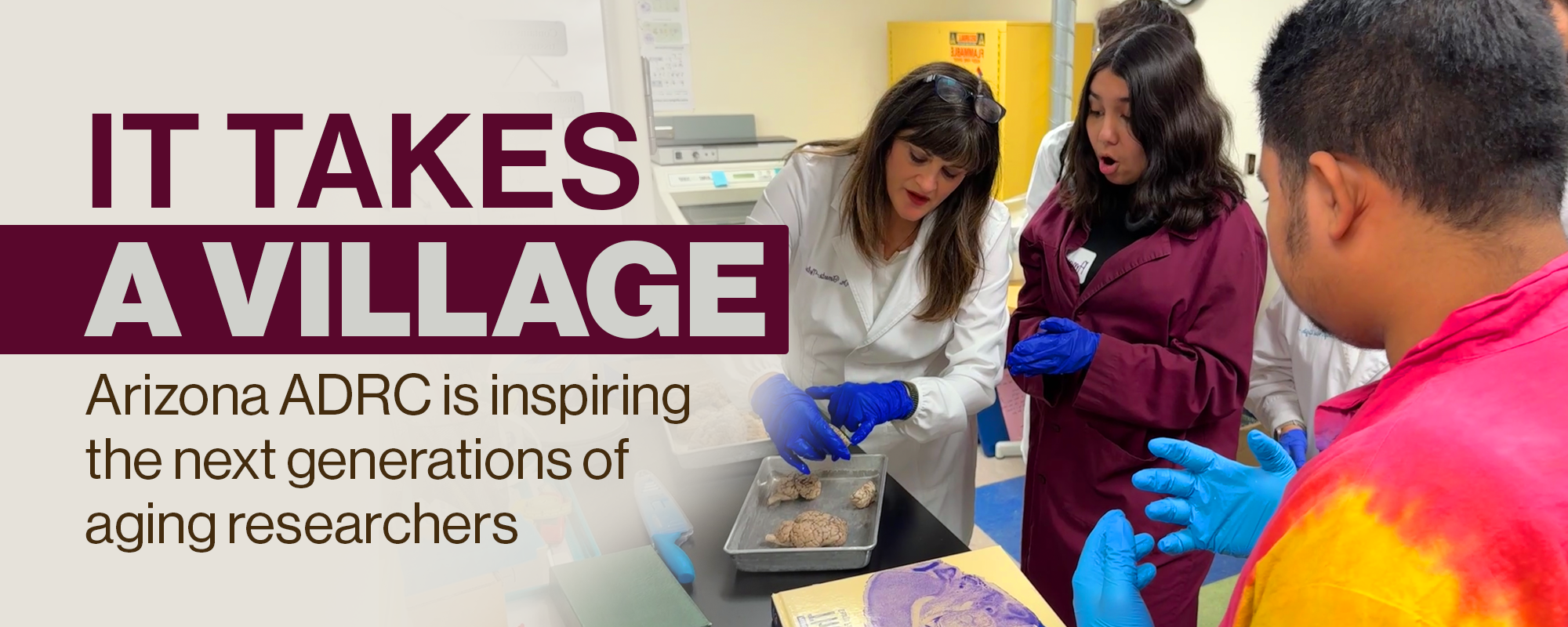
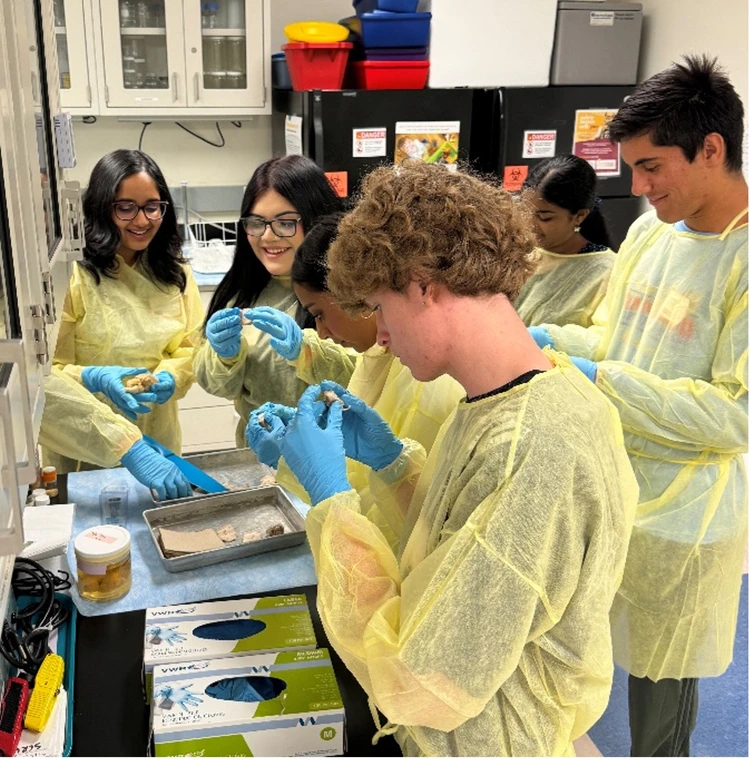
This program invites students to participate in a day of hands-on learning at ASU where students learn about the basics of aging science, interact with laboratory equipment, and even dissect a sheep brain. Students are also taught soft-skills, such as how to properly introduce themselves in a professional setting and how to interact with poster presenters at a scientific conference.
The Junior Fellows are then invited to attend the Arizona Alzheimer's Consortium Scientific Conference where they are able to put their skills to the test by interacting with presenters and learning even more about aging science. Bimonte-Nelson says she hears from students almost immediately about how excited they are to put their newly honed skills and confidence to the test.
"They come running up after they've introduced themselves to somebody, 'I just walked up and met Dr. Langbaum. I did it!', 'I just talked to somebody that might be willing to take a high school student.', 'I never thought I'd be able to do that!'" Bimonte-Nelson said.
The relationships built in the Junior REC Fellows program don't end after the Conference, though. Bimonte-Nelson says she stays in contact with students, writing them recommendation letters for college and connecting them with other researchers in the field who may be able to support the students' interests.
In the last two years, the program has grown to also bring high school teachers along for the workshop day and conference. These teachers have collaborated with Bimonte-Nelson afterwards to create educational materials to share with their students on aging science, creating an even larger reach than initially intended.
"Now, even the students that didn't come to the events with the Junior Fellows are hearing about aging and neurodegenerative diseases through their teachers," Bimonte-Nelson said.
Creating that safety net and sense of security for the next generation of Alzheimer's disease and aging researchers is important to Bimonte-Nelson and she hopes to continue and expand the REC programs in Arizona to do just that.
Bimonte-Nelson doesn't just start engagement with students at a high school level though, she says the next generation of scientists starts long before college. Through the ASU Brain Fair for Children, she interacts with students as young as third grade and introduces them to brain science. At these Brain Fairs, elementary students can engage with brain science through play and art, making pipe cleaner neurons, Play-Doh brains, and holding pieces of a sheep brain.
"I think that younger kids and high school students want to discover and deeply learn new things. My hope is that we teach them that science is exciting, and scientists are making new scientific discoveries daily that can impact the world. I also hope that the marvels of brain science will spark their curiosity, so that they realize science is not just a part of them, but it is in every person, and is all around us," Bimonte-Nelson said. "These students are our next generations. Exposing them to science can show them that our world and the future is full of surprising and wondrous things… that tomorrow can be full of possibilities and discoveries we did not know existed today. How each of us learn, invest, and engage today will impact our tomorrow."
Bimonte-Nelson hopes to continue growing these programs over the coming years and reaching new generations of scientists. Langbaum echoed the importance of mentoring and engaging students in aging research to inspire the next generation of scientists, "What's so critical here is that we are instilling in some of our youngest students this idea of neuroscience and the brain, getting them interested in perhaps coming back to us down the road, doing their studies here, getting into research, or just getting involved and being aware of neurodegenerative diseases."