Engaging Spanish-Speaking Participants with Culturally Informed Translations
More than 43 million people in the United States speak Spanish as their primary language, representing 14% of the US population, according to the US census. Engaging Spanish-speaking participants in Alzheimer’s disease and related dementias (AD/ADRD) research is integral to understanding the disease and developing therapies that improve the quality of life for people worldwide. The Alzheimer’s Disease Research Centers (ADRC) Program is uniquely positioned to engage research participants from many racial, ethnic, cultural and linguistic backgrounds. However, to include Spanish-speaking populations in AD/ADRD research, it is essential to have robust, culturally and linguistically appropriate data collection instruments and resources.
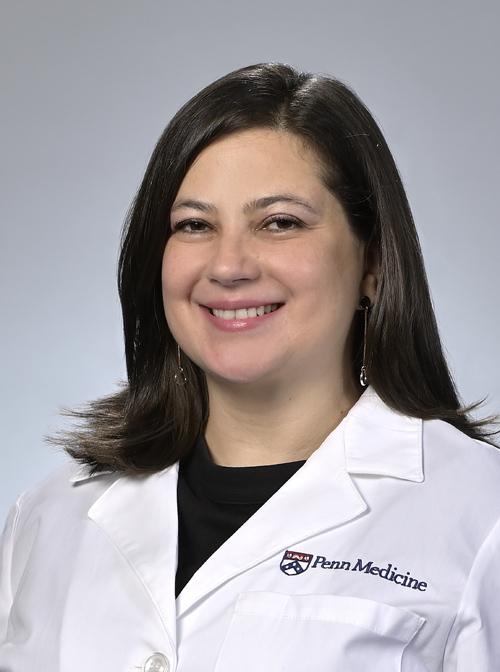
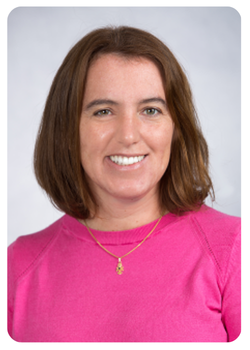
To address this need, a team of experts across the ADRC program, led by Katya Rascovsky, PhD, University of Pennsylvania ADRC, and María Marquine, PhD, Duke/UNC ADRC, is developing resources to support the inclusion of Spanish-speaking participants. This group, the UDSv4 Latino Task Force, has created a culturally aware, adapted version of the Initial Visit Packet (IVP) of the Uniform Data Set v4 (UDSv4) and has plans to release translated versions of the Follow-up Visit Packet and additional resources soon.
The inclusion of participants across cultural and linguistic backgrounds in the ADRC Program is integral to advancing research in AD/ADRD that benefits all. The UDSv3 Spanish translation was released in 2017 after a multi-year collaboration between Rascovsky and a team of researchers from Colombia, Argentina, Peru, and Mexico. While that translation effort expanded the ADRC Program’s capacity to include Spanish-speaking participants, it did not focus on addressing the unique challenges of including participants from the wide range of Latino backgrounds living in the United States. “[ADRC participants are] an incredibly diverse group of people from so many different places in Latin America that have regional variations, that have different ways of saying things, and that have different educational backgrounds,” Rascovsky said.
Rascovsky and Marquine recognized the need for diverse perspectives on the UDSv4 translation project and incorporated this into their recruitment of other members of the Latino Task Force. “We tapped investigators across the ADRC Program that were bilingual – it was really important that they were fluent in Spanish to be part of this task force – and we tried to represent different types of expertise,” Marquine said. Additionally, members of the Latino Task Force represent different Latino diasporic communities, either through their own cultural backgrounds or through the backgrounds of those they serve.
This perspective was especially important when adapting the word list tests in the neuropsychological battery. These tests involve presenting participants with a list of words or pictures, having them say the words aloud, and then asking them to recall the words after a delay. “It’s really an exercise in collaboration,” Rascovsky said about finding translations or adaptations for the word lists that would suit all participants. For example, one of the words used in the English version of the CERAD word list in the neuropsychological battery is “butter”, but in reviewing the worksheets, the Latino Task Force realized that “butter” is translated differently across the Latino population, making it a bad word choice for the Spanish translation. To prevent confusion and inconsistent scoring across participants, the task force chose to replace “butter” with “cookie” ("galleta" in Spanish), a word that is more consistently translated across dialects.
“ADRC participants are an incredibly diverse group of people from so many different places in Latin America that have regional variations, that have different ways of saying things, and that have different educational backgrounds”
In addition to linguistic differences, the task force considered cultural differences among Spanish-speaking participants in the US. A question on the Participant Demographics form (Form A1) asks about the participant's education level. In English, the answer options are split into six levels: less than high school, high school or GED, some college, bachelor’s degree, master’s degree, and Doctorate. For participants who received their education outside the US, these categories may not translate directly. “The literal translation of ‘Bachelor’s’ is bachillerato, but in Uruguay, for example, and a lot of other countries in South America, bachillerato is a high school diploma,” Marquine explained. This cultural difference required the task force to approach the translation of these answers with nuance rather than translating the English directly to Spanish.
The translation work done so far by the Latino Task Force is monumental for the ADRC Program, but more work remains. Marquine and Rascovsky are now working to develop normative or reference data for the neuropsychological tests. “We use reference data to determine if performance on a cognitive test is within expectation for the education that a person has had, how used they might be to taking tests, and all sorts of life experiences that we know impact how one performs in a cognitive test that have nothing to do with whether they have a neurological disorder or not,” Marquine said. These data are especially important to be able to accurately determine if a participant may have a neurodegenerative disease. Inaccurate reference data may lead to participants being misdiagnosed, which can harm their ability to receive appropriate treatments and prevent advances in the field that may better address the specific experiences and needs of Latino Alzheimer’s patients.
Looking to the future, the Latino Task Force hopes to create additional resources and training for clinicians and researchers to better serve Spanish-speaking populations and utilize the data in ways that can make the greatest impact on AD/ADRD research. As the field advances, the task force intends to continue developing Spanish language versions of data collection tools alongside the ADRC Program. They are eager to be involved in future updates to the UDS to address the unique cultural and linguistic needs of Latinos in the US and across Spanish-speaking countries.
NACC would like to extend special thanks to all members of the Latino Task Force. This essential work would not have been possible without your contributions:
- Katya Rascovsky, PhD, University of Pennsylvania ADRC, Co-Chair
- María J. Marquine, PhD, Duke/UNC ADRC, Co-Chair
- Lizbeth Vera-Murillo, Duke University, Coordinator
- Paula Aduen, PhD, Mayo Clinic ADRC
- Silvia Chapman, PhD, Columbia ADRC
- Maria Corrada, ScM, ScD, UC Irvine ADRC
- Lina D’Orazio, PhD, USC ADRC
- David Gonzalez, PhD, Rush ADRC
- Jorge Libre-Guerra, MD, MS, Washington University Knight ADRC
- Gladys Maestre, MD, PhD, South Texas ADRC
- Jaime Perales Puchalt, PhD, MPH, University of Kansas ADRC
- Monica Rosselli, PhD, 1Florida ADRC
- Zvinka Zlatar, PhD, MS, UCSD Shiley-Marcos ADRC